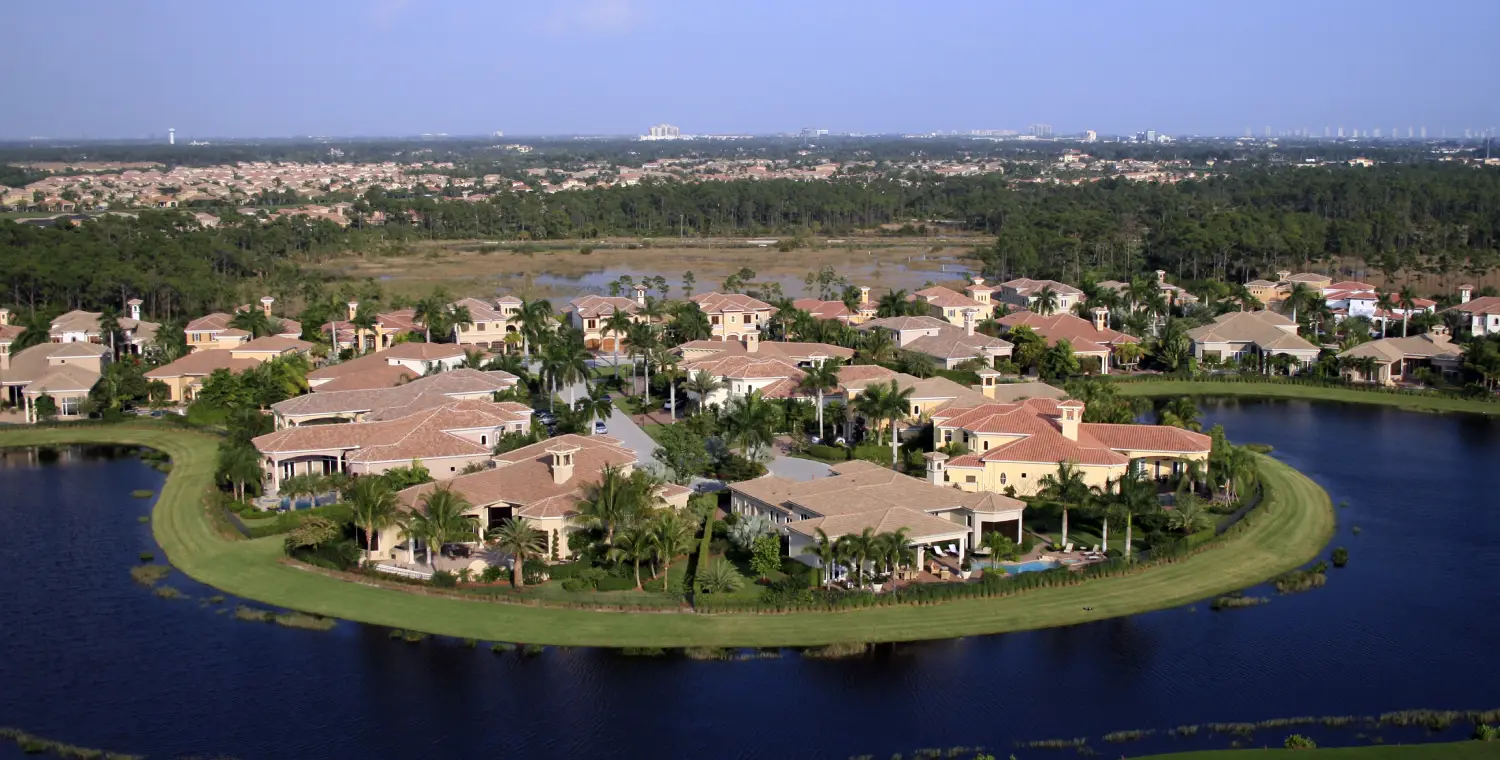
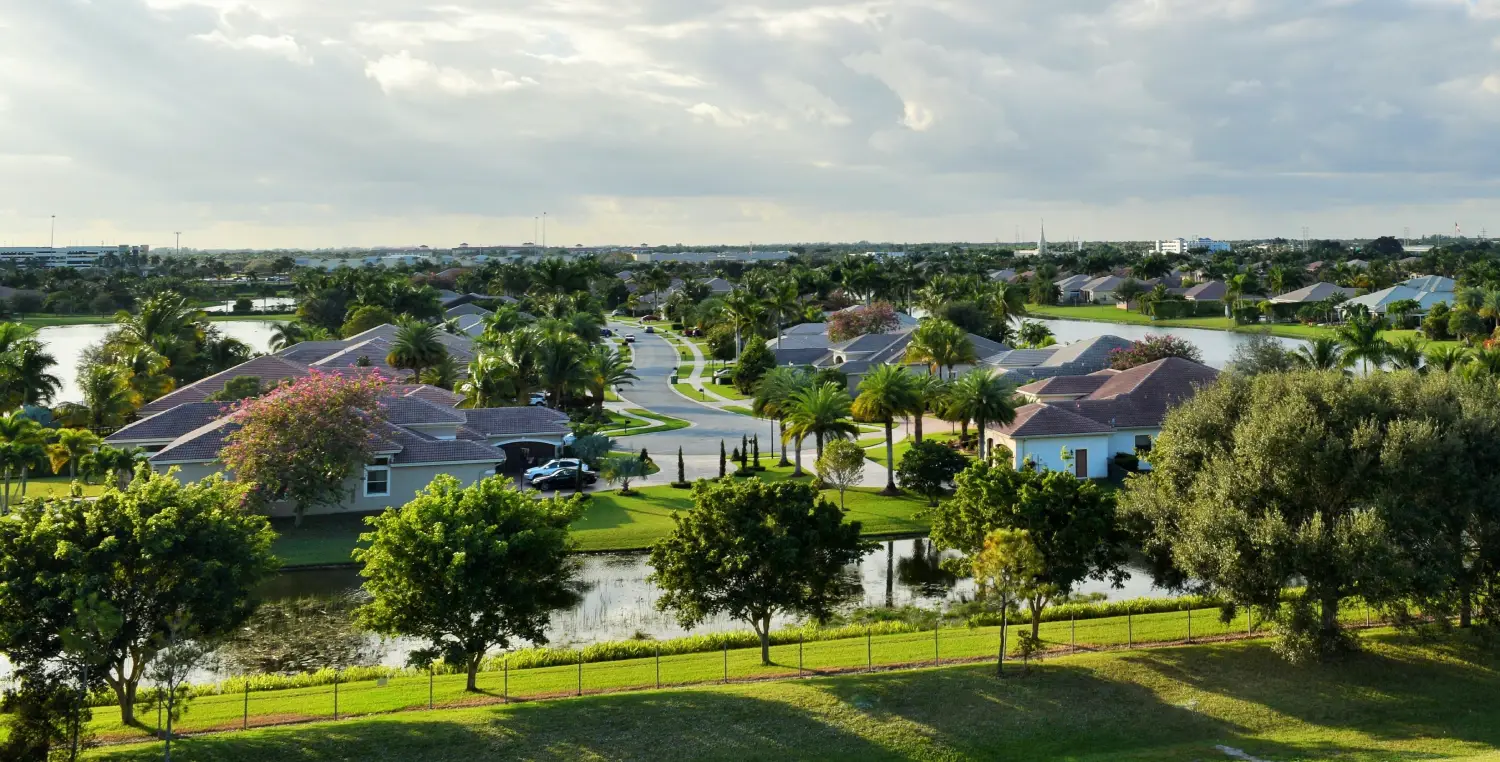
Coral Springs is a large planned city in northwest Broward County, developed from the 1960s onward under unusually consistent design standards, and it is one of the most family-driven rental markets in South Florida. Demand here is built on schools, parks and a suburban environment rather than on beaches or nightlife, which produces a fundamentally different tenant profile from the coastal cities: longer tenancies, lower turnover, and demand that holds steady year-round rather than swinging with the season. For owners prioritizing stability over rent spikes, that is the appeal.
How Coral Springs rents break down
As of this writing, one-bedroom rentals generally run from roughly $2,000 into the low-$2,000s, two-bedrooms from the mid-$2,000s into the high-$2,000s, and three-bedroom homes from the high-$2,000s into the low-$3,000s, with larger single-family inventory above that. A no-obligation rental analysis places a specific property:
- Country Club of Coral Springs and the premium communities — the city's strongest pricing, with amenity-driven demand and association approval processes.
- Westchester and the established central neighborhoods — mature single-family inventory with consistent family demand and strong school-zone appeal.
- Turtle Run and the newer planned communities — more recent construction at a modest premium, with conventional HOA structures.
- Forest Hills and the accessible neighborhoods — the value tier, with the city's most affordable entry point and steady workforce and family demand.
- Townhome and condominium inventory — the entry tier throughout the city, with building-level rules on leasing and approval.
What defines leasing in a planned family city
School zoning does most of the work. Family tenants choose Coral Springs substantially for schools, and they relocate less frequently than lifestyle-driven tenants. That makes tenant retention worth considerably more here than a marginal rent increase — a renewal at a modest uplift almost always beats a turnover costing weeks of vacancy plus make-ready. See our guide to lease renewal strategy.
HOA structures are widespread but conventional. Most Coral Springs communities operate standard HOA approval processes, considerably lighter than Palm Beach County's country clubs but still real: minimum lease terms, rental frequency caps and approval requirements apply in many communities and need verifying before listing. Florida law permits certain restrictions to be enforced retroactively — our guide to association rental restrictions covers which. Our tenant screening process runs alongside association review.
Consistency is the market's character and its constraint. The city's planned development produced comparatively uniform housing stock, which means a rental competes on condition and price rather than on location scarcity. Presentation at listing frequently decides between a two-week and a six-week vacancy — see why some rentals lease in 7 days while others sit for 60.
Roof age governs insurability on older inventory. Much of the city's stock dates to earlier development phases, and Florida carriers treat roofs past roughly fifteen years aggressively. A current four-point and wind mitigation report is effectively mandatory at renewal — see our guide to storm hardening and insurance, with renovation and make-ready coordination handling the upgrades.
Demand is genuinely year-round. Coral Springs does not experience a coastal seasonal swing. Occupancy is steadier and pricing less volatile, but there is no seasonal window to time a listing into — pricing and condition carry the entire outcome.
Owners receive rent collection, maintenance coordination with AI-assisted triage, monthly financial reporting and our eviction protection guarantee, under transparent pricing and eight written guarantees.
Coral Springs borders Pompano Beach to the east and Davie to the south, with Boca Raton across the county line into Palm Beach County. See our homepage for the full footprint.