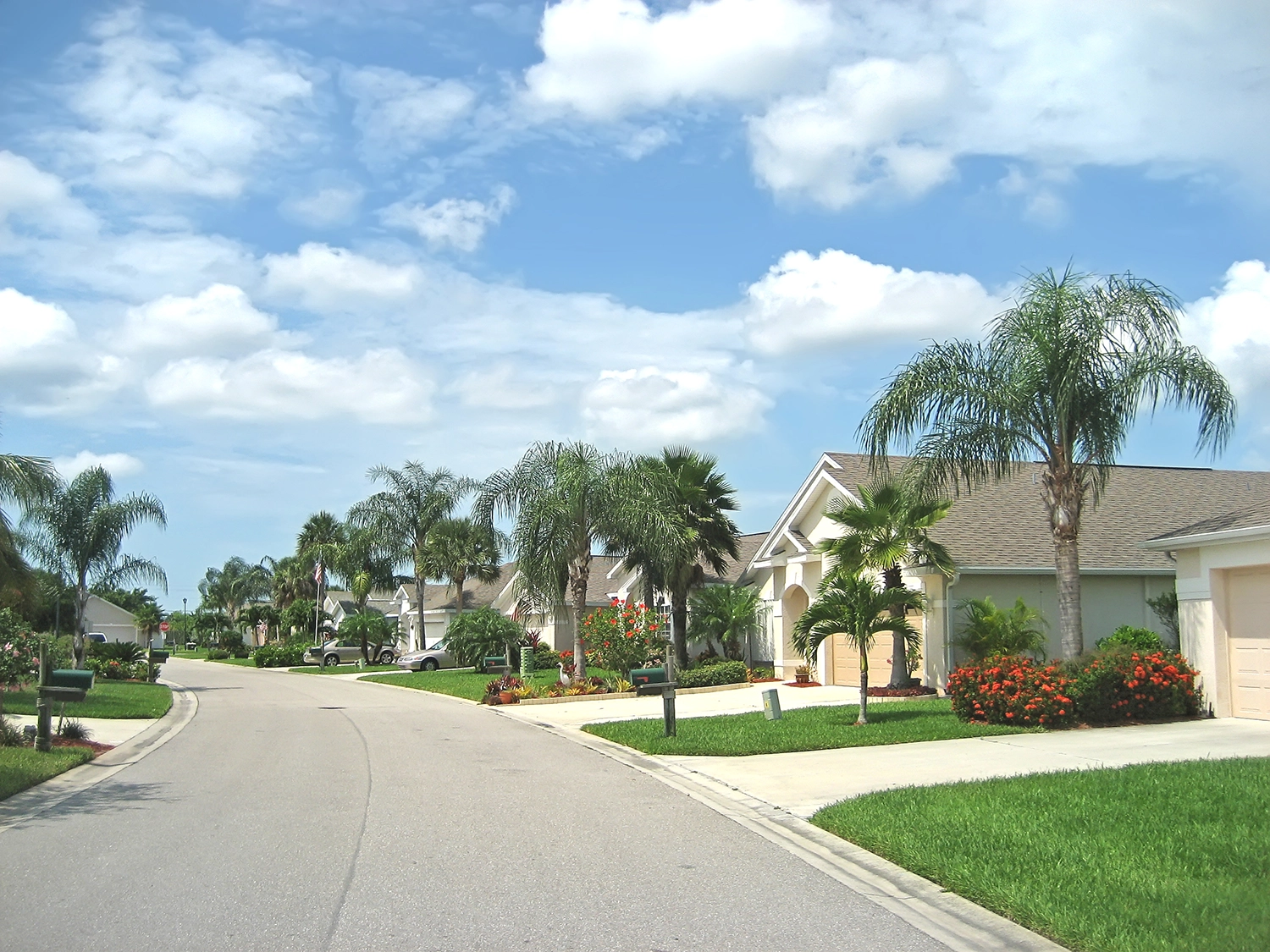
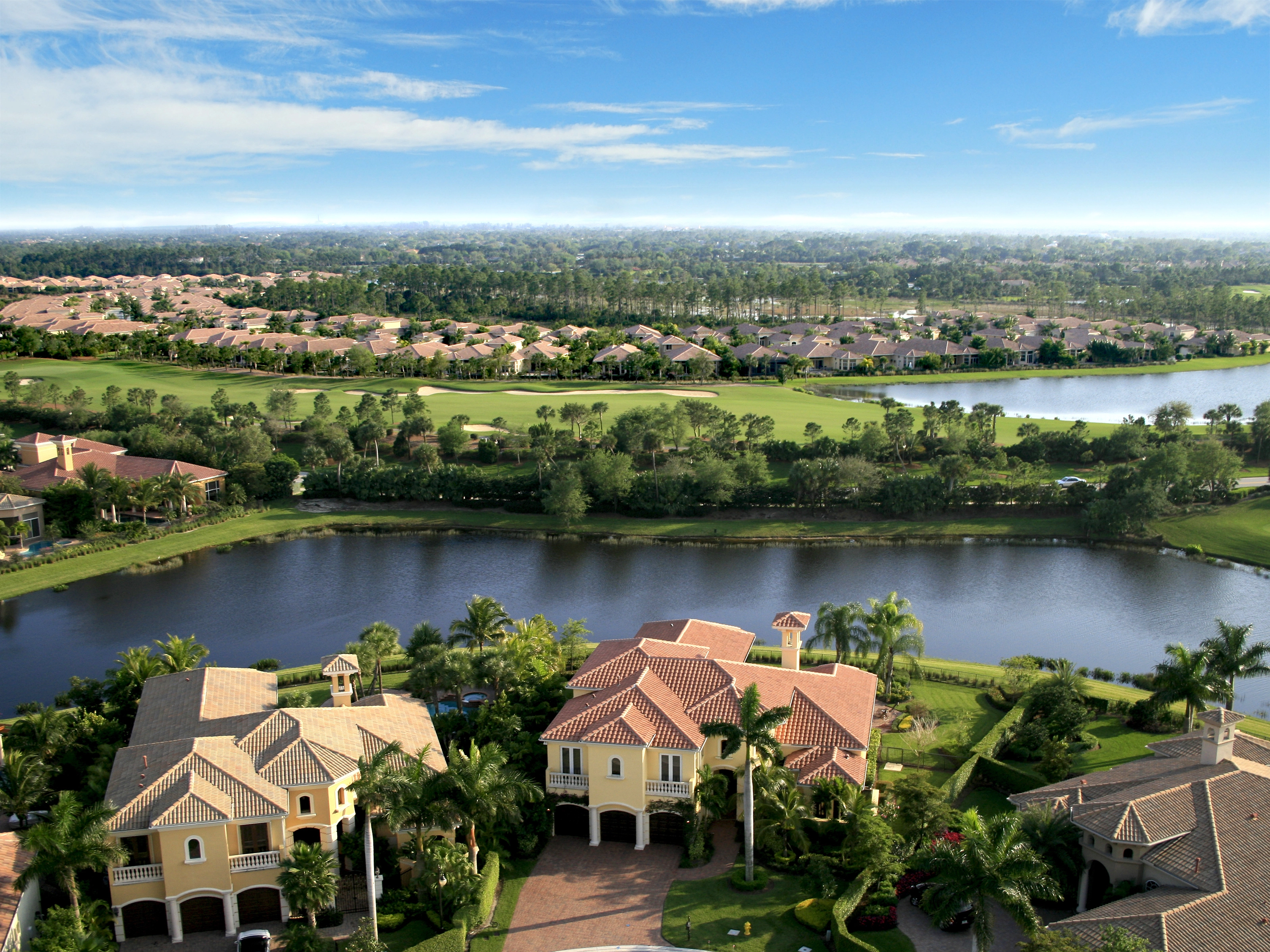
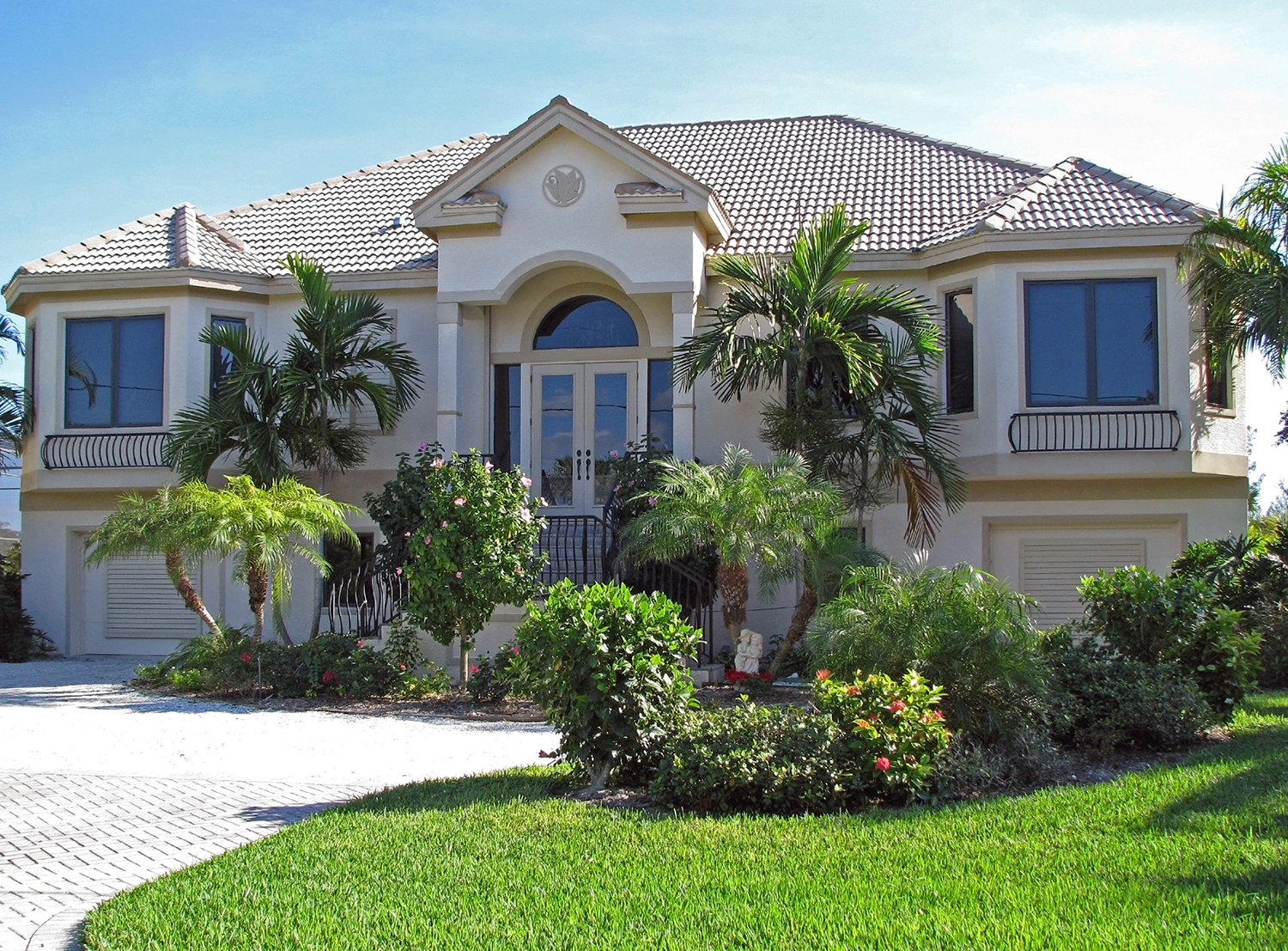
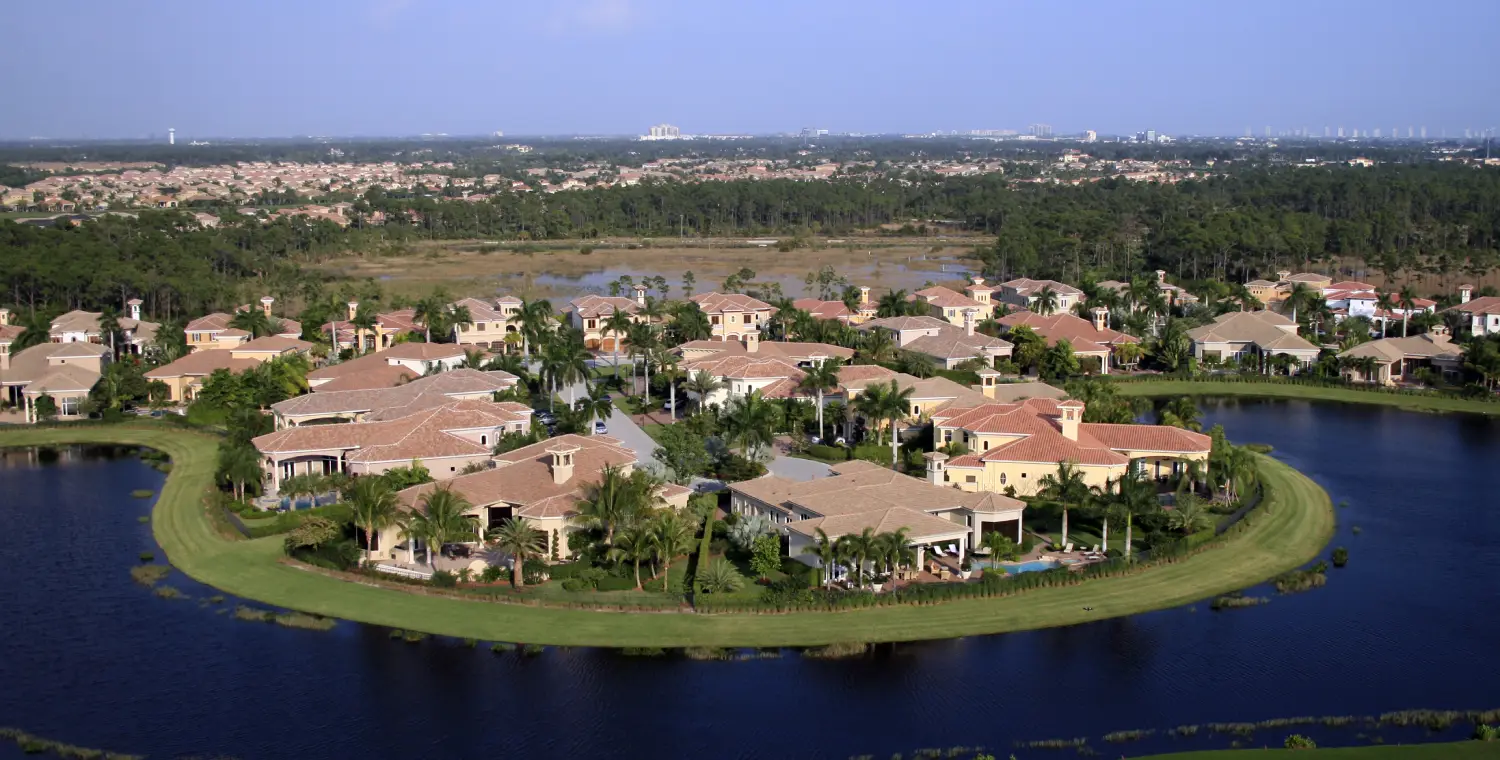
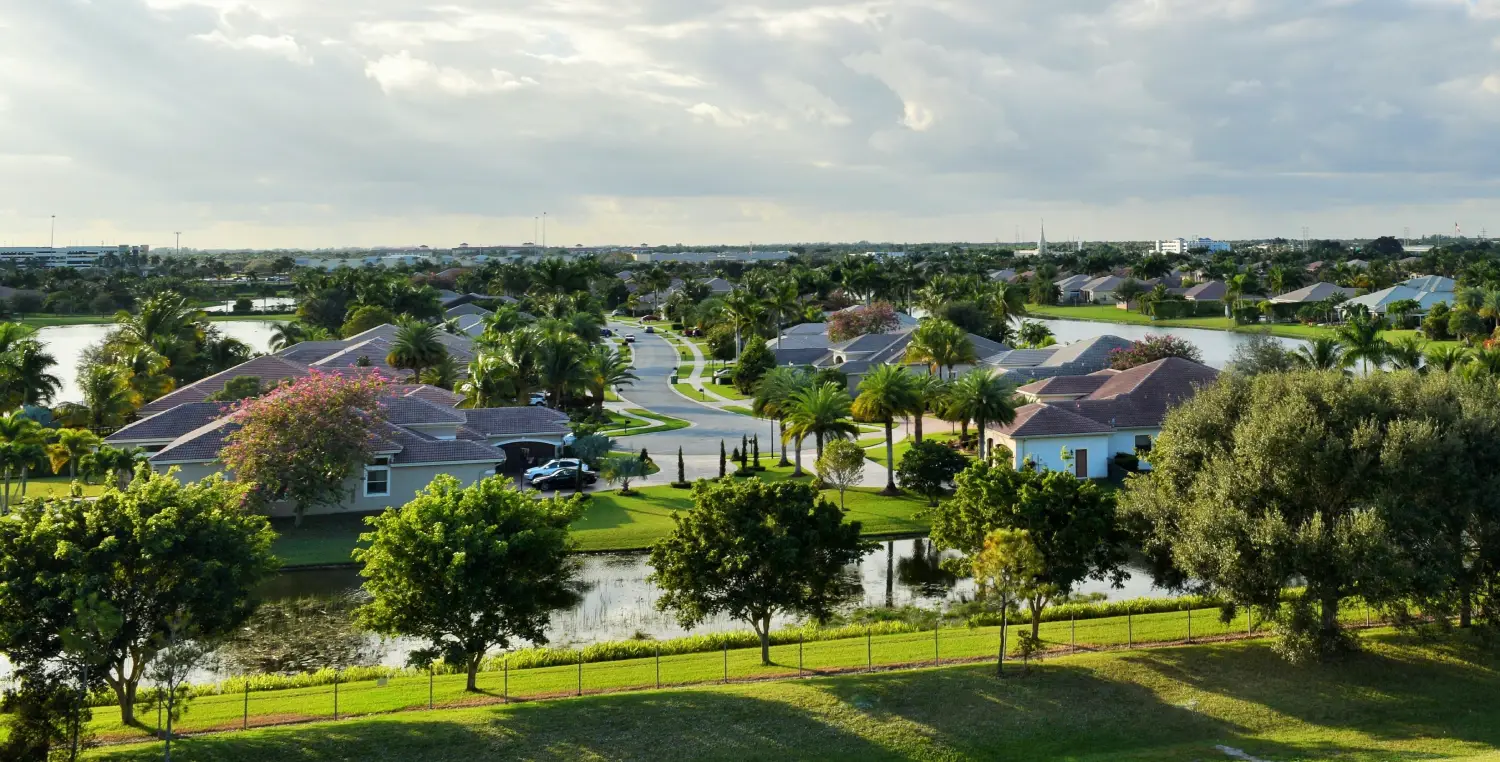
Royal Palm Beach is a western Palm Beach County village built largely on planned residential communities, and it operates on the most conventional rental economics in the county. There is no barrier island, no country club membership regime, no seasonal equestrian market and very little of the association complexity that defines the coastal cities. What there is instead is steady, year-round family and workforce demand driven by school zoning, commute access along Southern Boulevard and State Road 7, and entry prices well below the coast. For investors who want predictable cash flow without the operational overhead of a coastal or club-governed property, that is the entire appeal.
How Royal Palm Beach rents break down
As of this writing, one-bedroom rentals generally run from the mid-$1,000s into the low-$2,000s, two-bedrooms from roughly $2,000 into the mid-$2,000s, and three-bedroom single-family homes from the high-$2,000s into the low-$3,000s, with larger homes above that. A rental analysis places a specific property:
- The established planned communities — the bulk of the village's inventory, with conventional HOA structures and steady family demand.
- Crestwood and the central village neighborhoods — accessible single-family and townhome inventory with consistent year-round occupancy.
- Village Walk and the newer gated communities — amenity-driven demand at a modest premium to the village average.
- Townhome and condominium inventory — the entry tier, with workforce demand and the shortest time-to-lease when priced correctly.
Why this market rewards operational discipline over market timing
School zoning is the primary demand driver. Family tenants here choose the village substantially for schools and commute, and they tend to stay longer than tenants in lifestyle-driven coastal markets. Longer tenancies are worth more over a hold period than a marginally higher rent from frequent turnover, which makes renewal strategy more valuable here than aggressive annual repricing — see our guide to lease renewal strategy in Palm Beach County.
Association rules are real but conventional. Most Royal Palm Beach communities operate standard HOA structures with approval processes considerably lighter than the coastal country clubs. Minimum lease terms and rental caps still apply in many communities and still need verifying before listing — our guide to what HOAs can restrict covers the statutory framework, and our tenant screening runs alongside association review.
Pricing discipline matters more than seasonality. Unlike the coast, this market does not have a pronounced seasonal window to time a listing into. Demand is steady, which means a correctly priced property leases and an overpriced one simply sits. Our analysis of why some rentals lease in 7 days while others sit for 60 is directly applicable, and our vacancy cost calculator quantifies the cost of holding out for an unrealistic number.
Insurance still governs older inventory. Roof age remains the deciding factor on insurability for the village's older housing stock, and a current four-point and wind mitigation report is effectively mandatory at renewal. Our guide to hurricane insurance and shutters covers the upgrades that change a quote, and renovation and make-ready coordination handles the work.
Turn quality is the competitive lever. In a market with comparable inventory and no location scarcity, the condition of the unit at listing is often what decides between a two-week and a six-week vacancy. Targeted make-ready work, modeled before it is commissioned rather than after, is where the return is.
Owners receive online rent collection, our maintenance service, monthly owner statements and eviction protection, under transparent pricing and eight written guarantees.
Royal Palm Beach borders Wellington to the south and Westlake to the north, with Greenacres and West Palm Beach to the east and Lake Worth Beach beyond. See Palm Beach County property management.