Maintenance Optimization Case Study · Palm Beach County, Florida
$14,000 Saved in 12 Months: How a Preventive Maintenance Program Transformed a Palm Beach County Rental's Operating Costs
How Atlis Property Management replaced a reactive repair cycle with a structured preventive maintenance program, a vetted vendor network, and documented cost controls — reducing annual maintenance spend from $18,200 to $4,100.
$14,100
Annual Maintenance Savings
78%
Reduction in Repair Spend
0
Emergency HVAC Calls
4
Vendors Replaced
Overview
Maintenance spend is the most volatile line item in Palm Beach County rental property operating costs. A property with a structured preventive maintenance program, a vetted vendor network, and documented cost controls runs predictably. A property without these systems operates in continuous reactive mode — responding to failures instead of preventing them, paying emergency rates instead of scheduled rates, and spending $3–5 for every problem that a $1 preventive investment would have avoided.
This case study documents a Palm Beach County single-family rental where annual maintenance spend had reached $18,200 — 9.1% of gross rent on a $200,400/year gross income property. Over 12 months under Atlis management with a preventive program and vendor restructuring, maintenance spend dropped to $4,100: a $14,100 reduction that increased the owner's net operating income by 7% of gross rent.
Jean Taveras — Broker-Owner, Atlis Property Management
Licensed Florida Real Estate Broker · 600+ Properties Managed Across Palm Beach County
Reactive maintenance is the most expensive way to maintain a property. You pay emergency rates for work that could have been scheduled at standard rates. You replace systems that could have been extended with $300 annual service. You lose tenants who couldn't reach anyone at 10pm when the AC stopped working. The cost difference between reactive and preventive maintenance in Florida isn't marginal — it's the difference between a property that makes money and one that barely breaks even.
The Property & Owner Situation
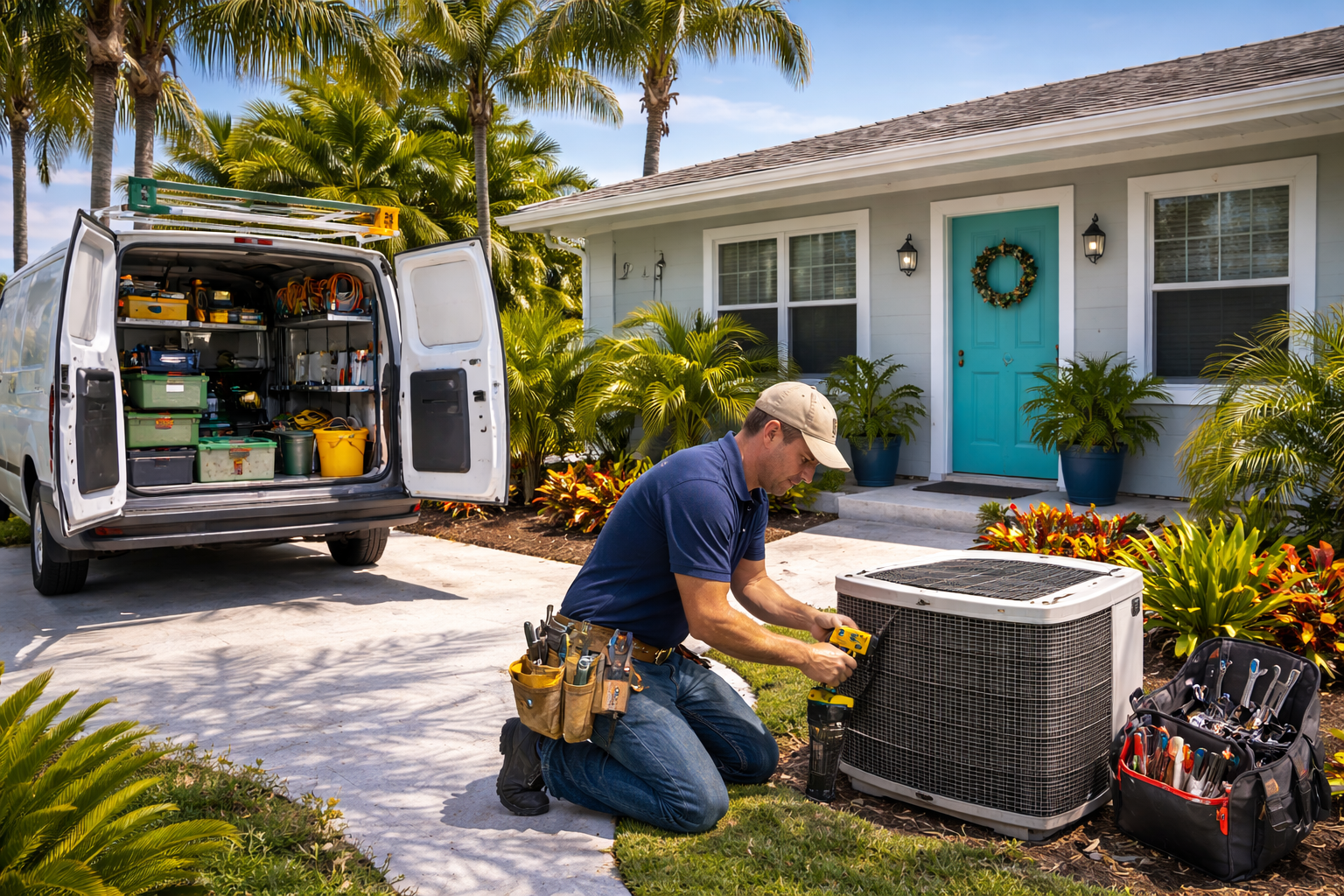
The owner had self-managed this 4-bedroom, 3-bathroom Palm Beach County home for 6 years. His maintenance approach was entirely reactive: he called whoever he found on Google when something broke, paid whatever was quoted without competitive verification, and responded to tenant maintenance requests on a variable timeline that ranged from 2 days to 3 weeks depending on his availability. The HVAC system had been serviced reactively — called for emergency repairs three times in the prior 18 months, at a cumulative cost of $4,800, without annual preventive service that would have cost $380 total.
The Challenge
The maintenance cost problem had four structural drivers — each of which required a specific intervention.
No Preventive Maintenance Schedule
Without a scheduled maintenance program, every repair was reactive. Reactive repairs cost 2–4× the cost of equivalent preventive work. HVAC systems that receive annual service average 4–6 years longer operational life. Exterior surfaces that receive annual inspections avoid the compounding moisture damage that turns a $400 repair into a $4,000 restoration.
Unvetted Vendor Network at Market or Above-Market Rates
The owner's vendor sourcing method — Google search and first available — resulted in inconsistent pricing, inconsistent quality, and no accountability structure. Four vendors working on the property in the prior year had been replaced after quality or pricing issues. The cost of unvetted vendor work — including callbacks to fix work done incorrectly — had added approximately $3,200 to the annual maintenance bill.
No Repair Authorization Threshold
Without a defined authorization threshold, every repair required an owner decision — regardless of size. This created delays on routine repairs (waiting for owner approval on a $75 dryer belt) and insufficient oversight on large repairs (a $3,400 HVAC repair authorized verbally without a written scope). Both failure modes cost money.
HVAC System Running Without Annual Service
The property's dual-zone HVAC system had not received annual preventive service in at least 3 years. In South Florida's climate, where HVAC systems run 10–11 months per year, annual service is not optional maintenance — it is the minimum investment required to prevent compressor failure, which runs $6,000–$12,000 for a system replacement.
Reactive vs. Preventive Maintenance: 12-Month Cost Comparison
This comparison shows the actual maintenance spend under reactive self-management vs. the first 12 months under Atlis's preventive maintenance program on the same Palm Beach County property.
Plumbing (reactive vs. preventive)
Exterior/roof inspection & maintenance
Vendor network cost savings
Total annual maintenance spend
$2,100 (3 reactive calls)
$3,200 (deferred = larger repair)
$0 (no negotiated rates)
$18,200
$490 (annual inspection + 1 minor repair)
$580 (annual inspection + targeted repairs)
$1,800 savings vs. prior vendor pricing
$4,100
Preventive plumbing inspection found issues before failure
Caught a developing roof seam issue before water intrusion
Atlis vendor pricing runs 15–25% below market rates
$14,100 net reduction — 78% cost decrease
Free Service · No Obligation
See Exactly What Your Palm Beach County Rental Should Earn
Get a data-backed rent analysis from Atlis — based on live comparable leases in your specific community. No guesswork, no obligation.
Get My Free Rent Analysis3801 PGA Blvd., Suite 600, Palm Beach Gardens, FL 33410 · (561) 473-3664
Strategy & Implementation
1. Property Systems Audit
Within the first 30 days of management, Atlis performed a full property systems audit: HVAC inspection and service, plumbing inspection, roof and gutter inspection, exterior inspection, electrical panel review, and appliance condition assessment. The audit identified 11 items requiring action — prioritized by urgency and estimated cost. The owner received a written report with Atlis's recommendations within 5 days of the audit.
2. Preventive Maintenance Calendar
Atlis established a 12-month preventive maintenance calendar specific to this property's systems, age, and South Florida climate requirements. The calendar included: quarterly HVAC filter checks, bi-annual HVAC service (September and March), annual exterior inspection, annual plumbing inspection, and annual roof inspection. All scheduled services were dispatched proactively by Atlis — the owner did not need to track or initiate any of them.
3. Vendor Network Replacement
Atlis replaced all four of the owner's prior vendors with Atlis-vetted, licensed contractors from the Atlis vendor network. Network vendors have negotiated pricing 15–25% below standard market rates, documented insurance and licensing, defined response time commitments, and performance accountability to Atlis. The vendor transition alone reduced the effective cost of routine maintenance work by $1,800 in year one.
4. Authorization Threshold Framework
Atlis established a written authorization threshold of $500: repairs under $500 are dispatched and coordinated by Atlis without owner approval, using network vendors at documented pricing. Repairs over $500 are presented to the owner with vendor quote, written scope, and Atlis recommendation before dispatch. This framework eliminated the delay cost on routine repairs and the approval risk on large repairs simultaneously.
The Results
$14,100
Saved in 12 Months
78%
Cost Reduction
0
Emergency HVAC Calls
11 items
Preventively Resolved
Total maintenance spend in the first 12 months under Atlis management: $4,100. This compares to $18,200 in the prior 12-month period — a $14,100 reduction representing a 78% decrease in maintenance cost. The HVAC system, which had generated three emergency service calls and $4,800 in reactive repair cost in the prior 18 months, generated zero emergency calls after annual preventive service was established. The preventive roof inspection identified a developing seam issue that, unaddressed, would have resulted in water intrusion and an estimated $8,000–$12,000 restoration — resolved for $580 in targeted preventive repair.
Common Mistakes Owners Make in This Situation
⚠ Running an HVAC system in South Florida without annual preventive service
An HVAC system in Palm Beach County runs 10–11 months per year. Annual service — costing $280–$420 — cleans coils, checks refrigerant, verifies electrical connections, and tests compressor operation. Skipping annual service increases the probability of compressor failure, which costs $6,000–$12,000 to replace. The ROI on annual HVAC service is never negative.
⚠ Using Google search as a vendor sourcing strategy
Sourcing vendors from Google search — first available, unverified pricing — produces inconsistent quality and above-market cost. Atlis's vendor network maintains negotiated pricing, verified licensing, documented insurance, and performance accountability. The pricing difference alone was worth $1,800 in year one for this property.
⚠ Responding to every repair as an isolated event
Reactive maintenance treats each failure as a unique event requiring a separate response. Preventive maintenance treats systems as interconnected with predictable maintenance cycles. A plumber who performs an annual inspection prevents the same three reactive calls that cost $2,100 in year one of this case study.
Free 30-Minute Consultation
Questions About Your Palm Beach County Rental? Schedule a Free Call
Jean Taveras answers your specific questions directly — no sales team, no scripts. Pick a time that works for you.
Schedule My Free ConsultationPick a time that works for you · Jean typically responds within 1 business day
Who This Case Study Applies To
This case study applies to any Palm Beach County landlord whose annual maintenance spend exceeds 8–10% of gross rent, or who has experienced more than two HVAC emergency calls in a 12-month period, or who is sourcing vendors reactively without a vetted network. These are the specific indicators of a reactive maintenance cycle that is costing money — and is directly fixable.
The Hyperlocal Context: Why Florida Rental Properties Require More Aggressive Preventive Maintenance
South Florida's climate creates specific maintenance pressures that properties in northern states do not face: year-round HVAC operation, high humidity that accelerates mold risk and building material degradation, UV exposure that deteriorates exterior finishes faster than in cooler climates, and hurricane season preparation that requires annual attention. A properly maintained Palm Beach County rental property budgets 10–13% of gross rent for maintenance annually — but that budget is largely absorbed by preventive costs, not reactive emergencies. A poorly maintained property spends the same budget reactively — and often exceeds it when deferred systems fail. Learn about Atlis's maintenance services.
Frequently Asked Questions
What This Case Study Demonstrates
- How a preventive maintenance program reduced annual repair spend by $14,100 on a single Palm Beach County property
- The specific cost drivers of reactive maintenance — HVAC, plumbing, exterior deferred repair
- How a vetted vendor network reduces effective maintenance cost by 15–25%
- The authorization threshold framework that eliminates both delay cost and approval risk
- Why South Florida properties require more aggressive preventive maintenance than properties in other markets
Key Takeaway
Reactive maintenance is the most expensive way to maintain a rental property in Florida.
A $380 annual HVAC service eliminated $4,800 in emergency repair costs. A $580 roof inspection prevented an $8,000–$12,000 water intrusion restoration. A vetted vendor network saved $1,800 vs. open-market pricing. These are not extraordinary results — they are the predictable output of a structured preventive maintenance program applied consistently to a Palm Beach County single-family rental.
Is Your Palm Beach County Rental Running a Reactive Maintenance Cycle?
Atlis offers a no-cost property systems audit for any Palm Beach County rental. We'll assess your current maintenance spend, identify your highest-risk systems, and show you exactly what a preventive program would save.
Get a Free Property Analysis Call 561.473.36643801 PGA Blvd., Ste. 600, Palm Beach Gardens, FL 33410 · info@atlispm.com