
Florida Landlord Legal Guide · Unlicensed Contractor Risk · 2026
Quick Answer
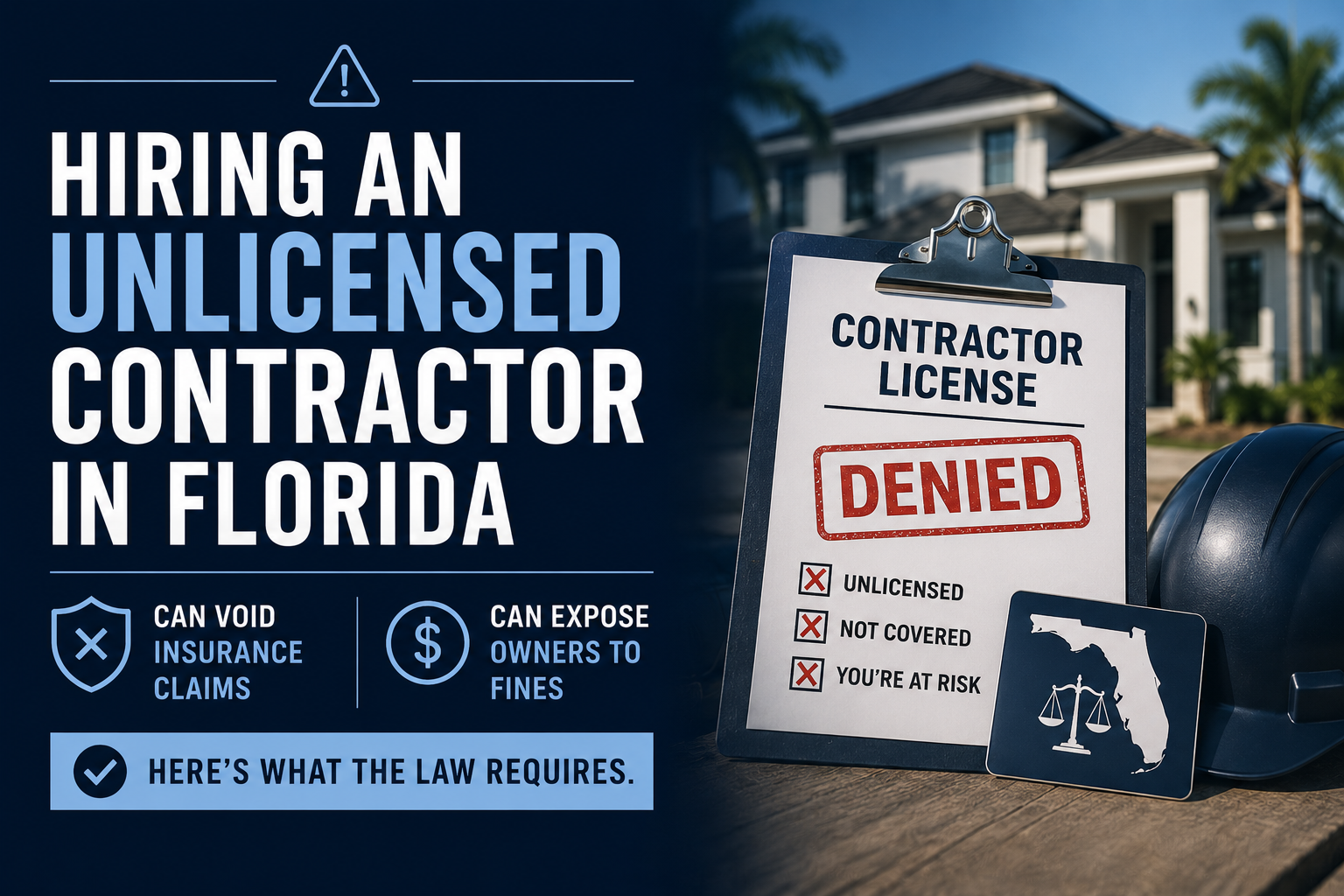
Under Florida Statute Chapter 489, contracting work affecting structure, electrical, plumbing, or HVAC generally requires a licensed contractor in that trade. Hiring an unlicensed contractor for work that requires licensure exposes the property owner to two serious risks: insurance claim denial (many policies exclude damage connected to unlicensed or unpermitted work) and weak legal recourse if the work fails, since an unlicensed contractor carries none of the bonding or regulatory accountability a licensed one does. Verifying a license takes under a minute at myfloridalicense.com — skipping that check is the single most avoidable risk in any rental property renovation.
By Jean Taveras, CEO & Broker-Owner, Atlis Property Management · Updated July 2026
Every year, Palm Beach County rental owners save a few hundred dollars hiring someone without a license, and a small number of them lose far more than they saved when something goes wrong. This isn't a scare tactic — it's a direct consequence of how Florida structures contractor licensing and how property insurance responds to unlicensed work. This guide covers exactly what the law requires, what happens when it's ignored, and how to stay on the right side of it without becoming a construction-law expert yourself.
Atlis coordinates renovations exclusively through licensed, insured vendors for owner-clients across Palm Beach County, including Pompano Beach, Fort Lauderdale, West Palm Beach, Jupiter, and Palm Beach Gardens.
What Florida Statute Chapter 489 Actually Requires
Chapter 489 of the Florida Statutes governs construction contracting licensure statewide. In broad terms, any work affecting a structure's integrity, electrical systems, plumbing, or HVAC requires a contractor licensed in that specific trade — a general contractor's license, or a specialty license for electrical, plumbing, roofing, or mechanical work depending on the scope. The statute defines “contracting” broadly enough to cover not just the person swinging a hammer, but anyone managing, directing, or supervising that work for compensation without the appropriate license.
Purely cosmetic work — painting, certain flooring replacement, minor fixture swaps that don't involve rewiring — often falls outside licensing requirements, but the line is not always where owners assume it is. A make-ready that seems purely cosmetic can cross into licensed territory the moment it involves moving a wall, adding an outlet, or altering plumbing rough-in. When scope is ambiguous, the safer assumption is that licensure applies, not the reverse.
The Insurance Consequence Most Owners Don't See Coming
This is the risk that surprises owners most, because it doesn't show up until far after the renovation is finished. Property insurance policies commonly include exclusions for damage caused by, or connected to, work performed by an unlicensed contractor where licensure was legally required. If a fire traces back to unpermitted electrical work, or water damage traces back to plumbing performed by someone without the proper license, the insurer has grounds to deny the claim entirely — leaving the owner to cover full replacement or repair cost out of pocket, on top of whatever the unlicensed work itself cost.
⚠ This Risk Is Retroactive
The insurance exposure from unlicensed work doesn't appear at the time of the renovation — it appears months or years later, when a claim is filed for damage the underlying unlicensed work contributed to. By the time an owner discovers the exclusion, the renovation is long complete and the unlicensed contractor may be long gone. There is no way to fix this after the fact; the only protection is verifying licensure before the work begins.
Legal Exposure for the Owner, Not Just the Contractor
Chapter 489 penalties are aimed primarily at the person performing unlicensed contracting, with consequences ranging from a misdemeanor to a felony depending on circumstances, prior offenses, and whether the work was performed during a declared state of emergency. The owner typically doesn't face criminal exposure for hiring an unlicensed contractor unknowingly — but the practical consequences still land on the owner: unpermittable work that must be redone by a licensed party before a certificate of occupancy or future sale can proceed, no recourse against a bonded or licensed party if the work fails, and the insurance exposure described above.
Some owners assume that pulling their own owner-builder permit and hiring unlicensed help is a legal way to save money. Florida does allow a narrow owner-builder exemption for an owner's own primary residence under specific statutory conditions, but this exemption generally does not extend to rental investment property, and attempting to use it to route around licensing requirements can create its own liability rather than avoiding it.
What About Handymen and Small Jobs?
Florida law does allow for minor repair work below a certain dollar threshold to be performed without a specialty contractor's license in some circumstances, which is where the popular idea of a “handyman exemption” comes from. In practice, this threshold is narrow, varies by the type of work, and does not apply to work affecting structure, electrical, plumbing, or HVAC regardless of the dollar amount involved. Owners frequently over-apply this exemption, assuming that because a job is small in cost it must be small in licensing risk — that is not how the statute is structured.
The safer practice for a rental property make-ready is to treat the exemption as narrower than it may appear rather than broader. A $400 job that involves rewiring a light fixture is not automatically exempt just because the dollar amount is small; the nature of the work, not the invoice total, is what determines whether licensure is required. When a job is genuinely cosmetic — painting, caulking, minor cosmetic repairs with no structural, electrical, or plumbing component — the exemption is far more likely to apply cleanly.
How to Confirm Licensing Before Any Work Begins
The Verification Steps, Every Time
- Search the contractor's name or license number directly at myfloridalicense.com — never rely on a photo of a card or a verbal claim.
- Confirm the license is active, not expired, suspended, or revoked.
- Confirm the license covers the specific trade the work requires — a general contractor's license doesn't substitute for a required specialty license in every case.
- Check the disciplinary history tab for open complaints or prior actions.
- When scope is ambiguous, confirm with the specific municipality's building department whether a permit and licensed trade are required before assuming otherwise.
This checklist works alongside the broader vetting process described in Atlis's guide to vetting any contractor — licensing verification is the single most important item on that list, but not the only one.
How Atlis Keeps Every Renovation on the Right Side of Chapter 489
Every vendor in the Atlis preferred network is verified for current Florida licensing appropriate to their trade before joining the network, with that status periodically reconfirmed rather than checked once and forgotten. Atlis coordinates the vendor relationship on the owner's behalf; the owner contracts directly with each licensed, insured vendor, and permits for any work requiring them are pulled by the licensed trade performing the work — never by Atlis. This structure means an owner working with Atlis never has to personally run the verification checklist above, because it has already been run before the vendor was ever presented as an option.
“The insurance denial is the consequence that actually gets owners, not the fine. Nobody thinks about their policy exclusions until they're filing a claim, and by then the unlicensed work is years old and there's nothing left to do about it. The fix is boring: check the license before you sign anything, every single time.”
— Jean Taveras, CEO & Broker-Owner, Atlis Property Management · FL Broker CQ1071712
Every vendor Atlis coordinates is verified licensed and insured, before you ever see a bid.
Renovations and make-readies coordinated exclusively through Atlis's vetted, licensed vendor network. Transparent 10% coordination fee on total project cost. FL Broker CQ1071712 · BBB Accredited.
See How Project Coordination Works →Get a Free Renovation Consultation →Frequently Asked Questions
What happens if I hire an unlicensed contractor in Florida?
Under Florida Statute Chapter 489, performing contracting work without a required license is a criminal offense for the contractor, ranging from a misdemeanor to a felony depending on circumstances and prior offenses. For the property owner, the consequences are typically financial rather than criminal: the work may not be permittable after the fact, insurance claims tied to that work can be denied, and the owner has far weaker legal recourse if the work fails or causes damage.
Can my insurance deny a claim because of unlicensed contractor work?
Yes, this is one of the most common and costly consequences owners overlook. Property insurance policies frequently exclude damage caused by, or connected to, work performed by an unlicensed contractor where a license was legally required. If a fire, water intrusion, or structural issue traces back to unpermitted or unlicensed work, the insurer may deny the claim entirely, leaving the owner to cover the full cost of repair out of pocket.
How do I know if a specific job requires a licensed contractor in Florida?
As a general rule, work affecting structure, electrical systems, plumbing, or HVAC requires a licensed contractor in that specific trade under Florida Statute Chapter 489. Purely cosmetic work — painting, minor fixture swaps that don't involve rewiring, or flooring replacement that doesn't affect structure — often falls outside licensing requirements, but the line isn't always obvious. When in doubt, verify with the specific municipality's building department or consult a licensed professional before assuming work is exempt.
Is it illegal to pull my own permit and hire unlicensed help to save money?
An owner can sometimes pull an owner-builder permit for their own primary residence under specific Florida statutory conditions, but this exemption is narrow, does not apply to rental investment property in most cases, and using it to circumvent licensing requirements for work that should be performed by a licensed contractor can itself create liability. For rental properties specifically, this exemption typically does not apply, and licensed contractors should perform any work requiring licensure.
Does Atlis ever use unlicensed vendors for rental property renovations?
No. Every vendor in the Atlis preferred network is verified for current Florida licensing appropriate to their trade before joining the network, and that licensing status is periodically reconfirmed. Atlis coordinates the project and vendor relationships on the owner's behalf; the owner contracts directly with each licensed, insured vendor, keeping the entire renovation on the correct side of Chapter 489.
About the Author
Jean Taveras — CEO & Broker-Owner, Atlis Property Management LLC
3801 PGA Blvd., Ste. 600, Palm Beach Gardens, FL 33410 · 561.473.3664 · info@atlispm.com
FL Real Estate Broker License CQ1071712 — myfloridalicense.com · BBB Accredited through April 2027
Florida contractor licensing requirements referenced under Florida Statute Chapter 489. License verification available at myfloridalicense.com. This article is general educational information, not legal advice; consult a licensed Florida attorney for guidance specific to your situation. Jean Taveras oversees vendor licensing verification across Atlis's managed portfolio in Palm Beach County, Broward County, and Miami-Dade.
For informational purposes only. Figures cited from third-party sources are attributed to those sources; figures describing Atlis own market experience are noted as such and are not independently verified external statistics. Not financial or legal advice.
Don't Let an Unlicensed Contractor Void Your Insurance
Every renovation Atlis coordinates runs through a preferred network of verified, licensed, insured vendors — so the Chapter 489 risk described in this article never becomes your problem.
See How Project Coordination Works →Get a Free Renovation Consultation →Call — 561.473.3664 →
info@atlispm.com · 3801 PGA Blvd., Ste. 600, Palm Beach Gardens, FL 33410 · FL Broker CQ1071712 · BBB Accredited