The 2026 Avenir Property Management & Investor Guide | Atlis Property Management
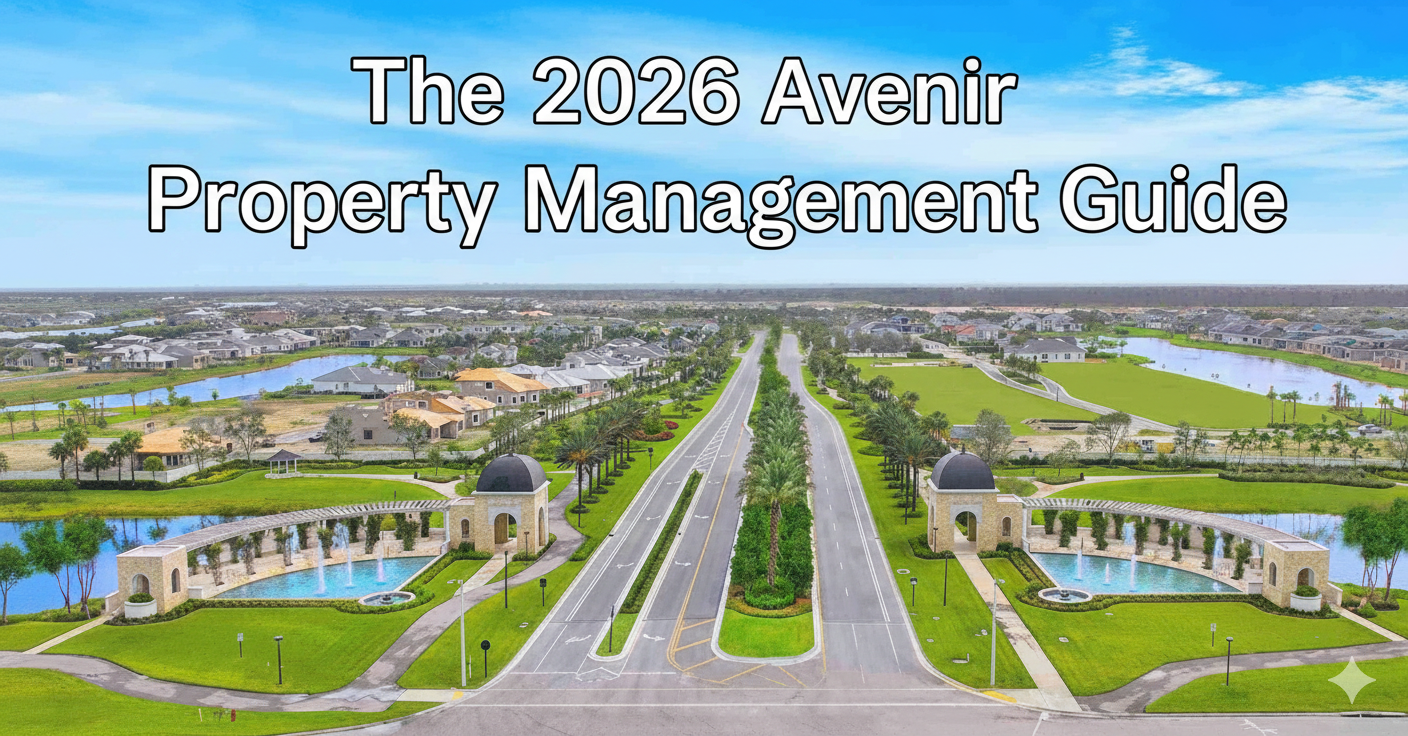
Avenir is one of Palm Beach Gardens’ most ambitious master-planned communities, recognized for large-scale preserve areas, new construction inventory, and resort-style amenity infrastructure. In 2026, high-performing ownership is driven by disciplined governance navigation (CDD vs HOA), leasing compliance, proactive maintenance, and storm-ready operations.
The State of Avenir Real Estate in 2026
Avenir’s 2026 identity is defined by three dynamics: (1) continued maturation as a master-planned ecosystem, (2) tenant demand fueled by Palm Beach Gardens’ desirability and new construction appeal, and (3) an operational complexity profile that is often underestimated by remote owners.
From an investment standpoint, Avenir typically performs best when the property is positioned as “turn-key”—meaning clean, well-maintained, properly documented, and aligned with community standards. In 2026, tenant expectations in premium planned communities are increasingly oriented around reliability: dependable HVAC, clean rooflines and hardscape, a well-run move-in process, and fast, professional maintenance response.
New construction premium
Tenants often pay more for newer systems, modern layouts, higher ceiling heights, and smart-home compatibility—when condition is preserved and the unit is professionally presented.
Amenity-centered demand
Amenity access and community experience can materially affect retention. Clear rules communication reduces conflicts and improves renewal likelihood.
Understanding Avenir Governance: CDD vs HOA (and Why It Matters)
Avenir is frequently discussed as “an HOA community,” but operationally, many owners experience a layered structure that includes a Community Development District (CDD) component alongside homeowners association governance, plus neighborhood-level rules depending on the specific enclave or subdivision.
What is a CDD in practical terms?
A CDD typically governs and funds certain public infrastructure and amenities via assessments. For owners and investors, the key operational implications include: understanding amenity rules, documentation, access policies, and assessment visibility in the total monthly carry cost.
What does the HOA control?
The HOA (and potentially neighborhood-level associations) generally drives architectural standards, exterior appearance requirements, use restrictions, and leasing frameworks. These rules influence whether a property can be leased, how often it can be leased, whether there is a minimum term, and what approvals are required.
Why governance structure changes your ROI
- Time-to-lease risk: approval processes can create delays if not planned correctly.
- Lease strategy constraints: minimum terms and frequency limits can restrict seasonal approaches.
- Violation exposure: aesthetic and operational rules can generate fines when compliance is not actively managed.
- Cost forecasting: dues, assessments, and reserve decisions influence long-term operating expense stability.
Hyperlocal Spotlight: Botanica, Palm Beach Gardens
Botanica in Palm Beach Gardens represents one of the most active rental submarkets in Palm Beach County for the specific considerations covered in this guide. Current rental rates in Botanica range from $2,700–3,500/month for single-family and townhome inventory, with demand driven primarily by corporate transferees, dual-income households, and long-term residents seeking stability in a well-maintained community.
Landlords operating in Botanica face the full complexity of Palm Beach Gardens's rental environment: HOA compliance requirements, a tenant pool with above-average income and expectation standards, and seasonal demand variation that rewards landlords who price accurately and market professionally. Atlis currently manages properties throughout Botanica and the broader Palm Beach Gardens submarket, with an average days-to-lease of under 21 days for properly prepared and priced units. Owners in this community who contact Atlis receive a no-obligation rental analysis specific to Botanica market conditions — not a county-wide estimate.
The 2026 Rental Market: Tenant Segments, Pricing Logic, and Sub-Neighborhood Patterns
In 2026, Avenir rental demand is commonly driven by relocating professionals, families seeking Palm Beach Gardens proximity and schools, and lifestyle tenants who prefer new construction and amenity access. Your rental outcome is dictated by two factors: (1) how the home compares to competing inventory in finish level and condition and (2) whether your leasing strategy is aligned with association rules.
Projected 2026 Rental Benchmarks (By Typical Property Type)
| Property Type | Monthly Rent (Annual) | Monthly Rent (Seasonal / Mid-Term) | Primary Demand Drivers |
|---|---|---|---|
| Townhomes / Smaller SFH | $3,800 – $6,000 | $6,500 – $10,000 | New construction appeal, convenience, lower maintenance footprint. |
| Mid-to-Large Single-Family Homes | $6,000 – $10,500 | $10,000 – $18,000 | Family layouts, upgraded kitchens, outdoor living, proximity to amenities. |
| Premium / Estate-Style (large lots, high-end finishes) | $10,500 – $18,000+ | $18,000 – $30,000+ | Luxury finishes, outdoor kitchens, pools, high-touch tenant expectations. |
These are general 2026 planning ranges, not a substitute for a property-specific rental comp analysis. Rent is highly sensitive to upgrades, pool features, furnishing quality (if applicable), and the community’s approved leasing framework for your specific neighborhood.
Tenant segmentation: how to position correctly
Relocation tenants (annual)
Highest preference for reliability and speed: clean move-in, working systems, and consistent maintenance response. Best served by strict screening and strong documentation.
Seasonal and mid-term tenants
Premium pricing potential, but only viable if your association allows the lease term and frequency, and if furnishing/utility expectations are professionally managed.
Maintenance Cost Reality: What Palm Beach County Landlords Actually Spend
Maintenance budgets built on national averages consistently under-fund Palm Beach County properties. Florida's climate, coastal exposure, and older housing stock create specific cost drivers that landlords must plan for accurately.
Exterior paint cycle (coastal SFH)
Pool maintenance (monthly, where applicable)
Roof inspection + minor repairs (annual)
Total annual maintenance budget (% gross rent)
Every 5–6 yrs
$140–$220/mo
$380–$620
10–13%
Every 7–9 yrs
$80–$140/mo
$200–$400
7–9%
Salt air and UV accelerate finish degradation
Chemical demand higher in South Florida heat
Wind-event exposure requires more frequent inspection
Palm Beach County properties require a larger reserve
Free Service · No Obligation
See Exactly What Your Palm Beach County Rental Should Earn
Get a data-backed rent analysis from Atlis — based on live comparable leases in your specific community. No guesswork, no obligation.
Get My Free Rent Analysis3801 PGA Blvd., Suite 600, Palm Beach Gardens, FL 33410 · (561) 473-3664
Leasing Restrictions & Approval Timelines: The Most Common Investor Traps
The most expensive Avenir mistakes usually occur before a lease is signed: advertising a lease term the association does not allow, promising move-in dates that cannot be met, or failing to account for application processes and required documentation.
Typical leasing controls to verify in 2026
- Minimum lease term: many planned communities restrict short-term leasing; some neighborhoods require multi-month or annual terms.
- Lease frequency limits: restrictions may limit turnover (for example, limiting the number of leases per year).
- Tenant screening/approval: association approval may be required and can take weeks, depending on processing cadence.
- Move-in/move-out rules: some communities limit move-in days, require deposits, or enforce elevator/parking logistics for moves.
- Vehicle and parking compliance: commercial vehicles, overnight street parking, and certain signage can trigger violations.
Best-practice leasing timeline (repeatable and defensible)
- Rule verification: confirm lease minimums, frequency limits, application steps, and required forms.
- Pre-marketing readiness: inspection, punch list, cleaning, photos, and documentation package finalized.
- Screening discipline: verify income, employment, background, and rental history; apply consistent criteria.
- Association submission: complete file delivered with required fees and lead time built into move-in date.
- Move-in controls: condition report, keys/access, rules acknowledgment, and maintenance onboarding.
Operational Excellence in Avenir: Inspections, Documentation, and Vendor Control
In 2026, high-quality property management is fundamentally an operational discipline. The goal is predictable outcomes: fewer emergencies, fewer disputes, faster turns, cleaner ledgers, and stronger tenant retention.
The core operating system (what protects owners)
- Inspection cadence: move-in documentation, mid-lease inspections (as permitted), and move-out verification.
- Maintenance triage: structured work orders, defined approval thresholds, and documented before/after results.
- Vendor governance: license/insurance verification, pricing controls, invoice standards, and scope-of-work discipline.
- Owner reporting: consistent monthly statements, categorized expenses, reserve planning, and repair history transparency.
Maintenance Standards for New Construction: Protecting Warranties and Avoiding Violations
Newer homes can reduce immediate capital expenditure risk, but they introduce a different risk: warranty invalidation due to missed maintenance and improper repairs. Avenir owners in 2026 should treat preventive maintenance as a warranty-protection strategy—not merely a convenience.
2026 maintenance priorities that commonly matter most
- HVAC and humidity control: bi-annual service, drain line flush, filter discipline, and humidity monitoring to reduce mold risk.
- Irrigation and landscaping: consistent watering schedules, leak detection, and plant replacement to maintain curb appeal and reduce violations.
- Roofline, gutters, and drainage: routine checks to prevent water intrusion and staining, especially after storms.
- Pool operations (if applicable): weekly service, chemical logs, equipment checks, and compliance with safety requirements.
- Builder-grade fixtures: proactive replacement planning for commonly stressed items (garbage disposals, faucet cartridges, garage sensors).
Appearance standards: the hidden cost of delay
Planned communities frequently enforce consistent exterior presentation. Minor issues—mulch fade, dead landscaping, staining, pressure-wash needs, or unapproved exterior changes—can become repeated notices. A practical strategy is scheduled, documented exterior upkeep rather than reactive repair.
Storm Readiness & Water Risk: Florida-Grade Preparedness for 2026
Storm preparation is not optional operationally. Avenir owners—especially those who are out-of-state—should implement a repeatable pre-storm and post-storm protocol, including documentation, vendor readiness, and tenant communications.
Pre-storm checklist (operationally effective)
- Exterior securement: patio furniture, loose items, umbrellas, grills, and planters secured or stored.
- Drainage review: confirm drains are clear; verify downspouts and grading where possible.
- Photo documentation: timestamped exterior and key interior photos pre-storm (claims readiness).
- Tenant messaging: clear instructions for emergency reporting, shutoffs, and safety priorities.
- Vendor readiness: preferred vendors on standby for tarps, dry-out, and tree debris response.
Post-storm actions (what reduces claim pain)
- Immediate triage: water intrusion, roof damage, and electrical hazards prioritized first.
- Mitigation documentation: photos, vendor invoices, moisture readings where applicable.
- Association communication: report common area impacts through official channels if relevant.
- Tenant habitability: timely decisions on temporary relocation if required.
Free 30-Minute Consultation
Questions About Your Palm Beach County Rental? Schedule a Free Call
Jean Taveras answers your specific questions directly — no sales team, no scripts. Pick a time that works for you.
Schedule My Free ConsultationPick a time that works for you · Jean typically responds within 1 business day
Financial Optimization: Taxes, Insurance, and Short-Term Tax Exposure
Avenir assets are often high-value, making insurance structure and tax planning especially important. In 2026, owners should plan around two realities: (1) insurance underwriting and deductibles often tighten after regional weather events and (2) lease duration can create tax exposure for rentals under six months.
Taxes and lease duration: what owners often overlook
In Palm Beach County, transient rentals (often defined as six months or less) may require collection and remittance of local tourist development taxes, in addition to any state-level obligations. This is primarily an operational compliance topic: if you run shorter leases, your accounting must be structured to handle it.
Insurance structure considerations for 2026 (owner-focused)
- Loss of rent coverage: verify adequate limits for storm-related or covered peril events.
- Water backup and seepage endorsements: evaluate endorsements that may be relevant to claim gaps.
- Wind mitigation: inspect and document protective features that may reduce premiums or improve underwriting outcomes.
- Liability and umbrella: high-value properties and pools often justify stronger liability frameworks.
Non-homestead property taxes (investor planning)
Non-homesteaded properties can experience higher annual increases than owner-occupied homesteaded assets. Investors should plan expenses conservatively and consider tax planning strategies, including depreciation optimization where appropriate.
Landlord Scenario: A Real Palm Beach County Owner's Experience
The situation: A corporate relocation landlord owned a 4-bedroom single-family home in Avenir. She was transferred overseas and needed professional management immediately. The result: signed a tenant without verifying employment, discovering at month 3 that the tenant had been laid off and couldn't pay rent.
What changed: After engaging Atlis Property Management, the team implemented Atlis's income verification protocol requiring 2 months of pay stubs plus employer verification call. The property was brought into compliance with current market standards and operational best practices within 30 days of onboarding.
The outcome: The owner placed tenants with verified, stable income in every subsequent tenancy — no income-related payment issues in 22 months. The management fee paid for itself within the first lease term, and the owner has since retained Atlis for two additional properties in her portfolio.
Why Professional Management Is a Strategic Advantage in Avenir
Professional management in Avenir is best viewed as asset protection plus performance optimization. The operational environment includes governance rules, aesthetic standards, approval processes, and Florida-specific risk profiles. A competent management structure reduces vacancy risk, mitigates compliance exposure, and improves the tenant experience—directly supporting retention and price integrity.
Atlis Property Management: Avenir-focused oversight
- Governance-first leasing: confirming neighborhood rules, managing approvals, and structuring lease timelines that can actually be executed.
- Preventive maintenance discipline: scheduled service plans, warranty-protective repairs, and vetted vendor coordination.
- Tenant screening and documentation: consistent screening standards, clean lease packages, and enforceable rule acknowledgment.
- Transparent reporting: organized monthly statements, repair history, and portfolio-level visibility for decision-making.
- Storm protocol operations: pre-storm readiness, post-storm triage, documentation, and owner communication systems.
Summary Table: Avenir (2026) Quick Reference
| Requirement | Details & 2026 Operating Notes |
|---|---|
| Governance Layers | Often includes CDD-related rules/assessments plus HOA rules; neighborhood-level standards may apply depending on the enclave. |
| Minimum Lease Term | Varies by neighborhood and governing documents. Verify your address-specific restrictions before advertising. |
| Approval Timelines | Association review and tenant approval steps can impact move-in dates. Build lead time into your leasing calendar. |
| Exterior Standards | High. Landscaping, cleanliness, and unapproved exterior changes can trigger violation notices and fines. |
| New Construction Warranty Risk | Maintain documentation and preventive service records to reduce warranty disputes and preserve system performance. |
| Storm Preparedness | Implement pre-storm and post-storm protocols, including documentation, vendor readiness, and tenant instructions. |
| Short-Term / Under-6-Month Leasing | May trigger transient rental tax obligations in Palm Beach County; confirm applicability with a qualified tax professional. |
| Insurance Planning | Evaluate loss of rent limits, water-related endorsements, wind mitigation, and liability/umbrella adequacy. |
Protect and Maximize Your Avenir Investment
If you own in Avenir and want a defensible, repeatable operating system—governance-first leasing, preventive maintenance, storm readiness, and clean reporting— Atlis Property Management can provide the local structure to protect your asset and improve performance.